

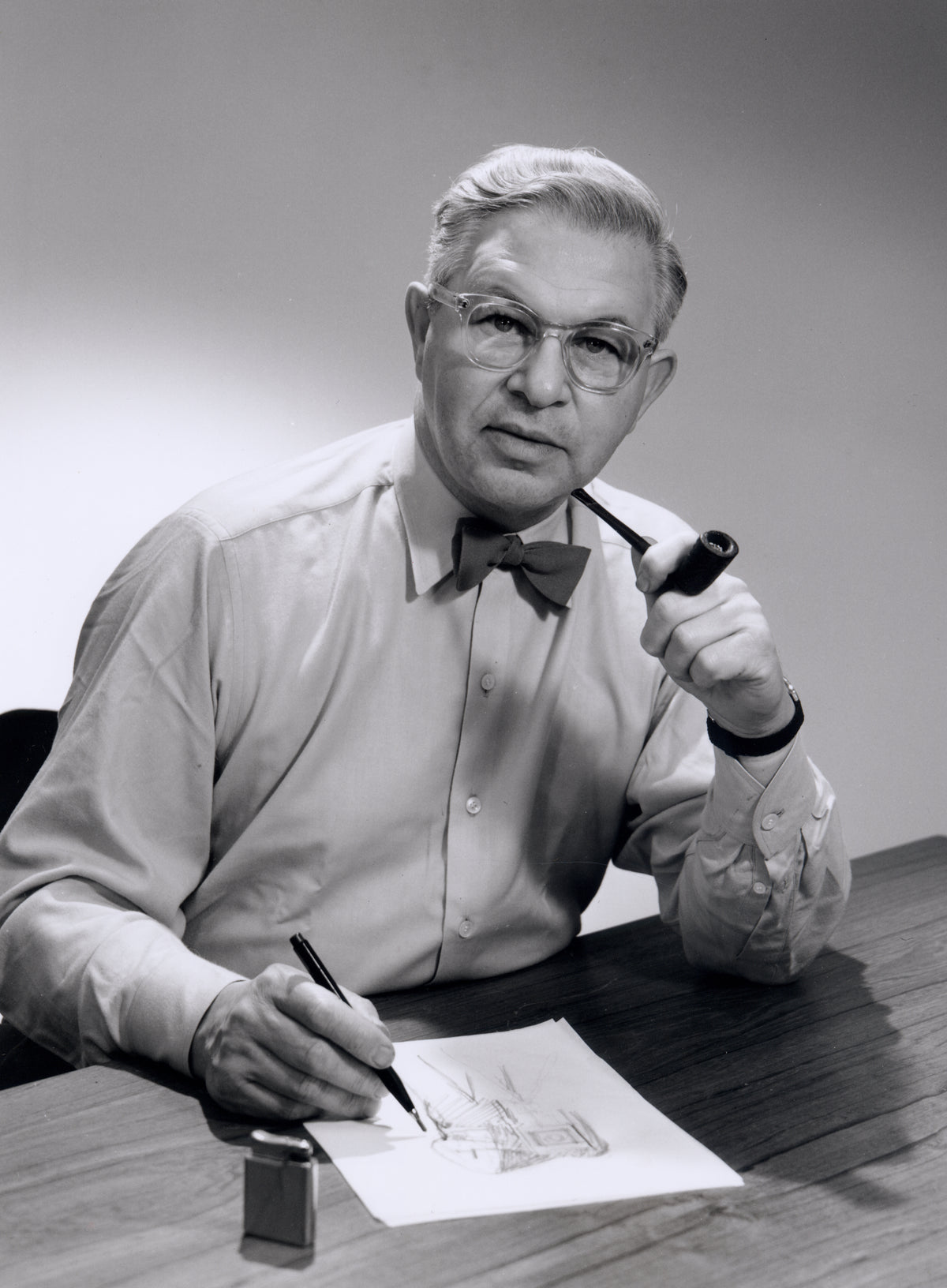
1902-1971
Arne Jacobsen
About Arne Jacobsen
From the late 1920s until his death in 1971, Jacobsen was at the forefront of Danish architecture and design. He worked as an architect, furniture designer, industrial designer and landscape architect, often within a single project, and his work ranged in scale from a national bank to a teaspoon. He rarely stopped working: rest, for Jacobsen, meant moving from one creative task to the next. At home, he kept a garden of more than 300 plant species, which he studied closely and drew on in his work. Whatever he was designing, he returned to the same question: whether the proportions were right.
Arne Jacobsen's Architecture
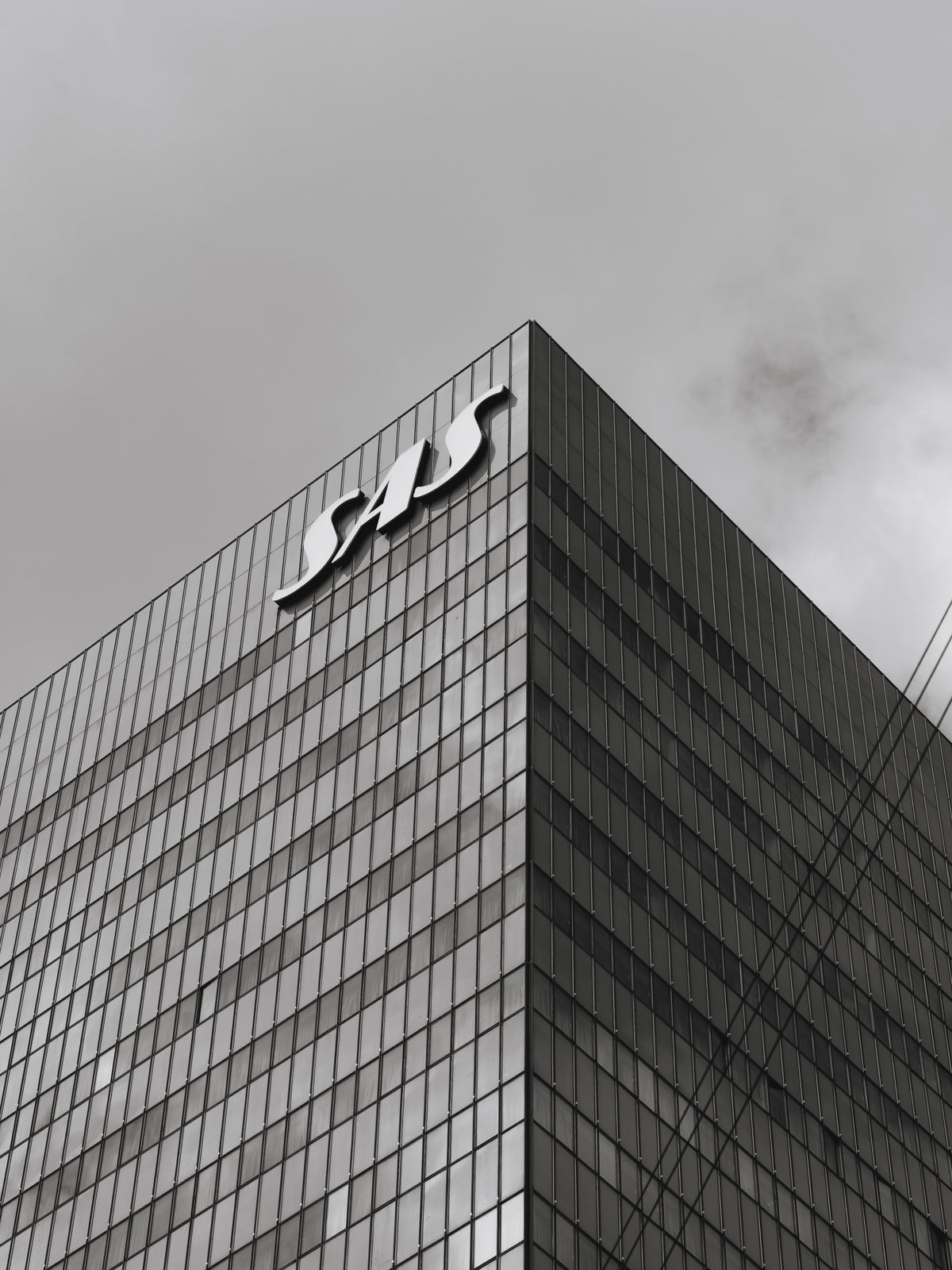
Jacobsen was among the first architects to bring modernism to Denmark. In the late 1920s and 1930s, his white functionalist buildings north of Copenhagen, among them the Bellavista housing development and the Bellevue Theatre, marked a clear break from the traditional architecture of the time. His later buildings followed international modernism, with steel, glass and curtain walls.
His most important buildings were conceived as a Gesamtkunstwerk, a total work of art, with the architecture, interiors, furniture, lighting and often the garden designed as one. The approach runs through his town halls in Aarhus, Søllerød and Rødovre, the SAS Royal Hotel and Danmarks Nationalbank in Copenhagen, and St Catherine's College in Oxford.
"The proportion is exactly what makes the beautiful ancient Egyptian temples […] and if we look at some of the most admired buildings of the Renaissance and Baroque, we notice that they were all well-proportioned."
- Arne Jacobsen


Arne Jacobsen and Fritz Hansen
Fritz Hansen's work with Arne Jacobsen began in the 1930s with furniture for the Bellevue Theatre, and it grew into one of the most important partnerships in Danish design.
Innovations in production techniques introduced at Fritz Hansen gave Jacobsen room to experiment with material and form. The Ant™ chair of 1952, developed for the canteen at the Novo factory, was the first chair with a seat and back made from a single sheet of pressure moulded veneer. It marked his breakthrough as a furniture designer and was followed by the Series 7™ chair in 1955.
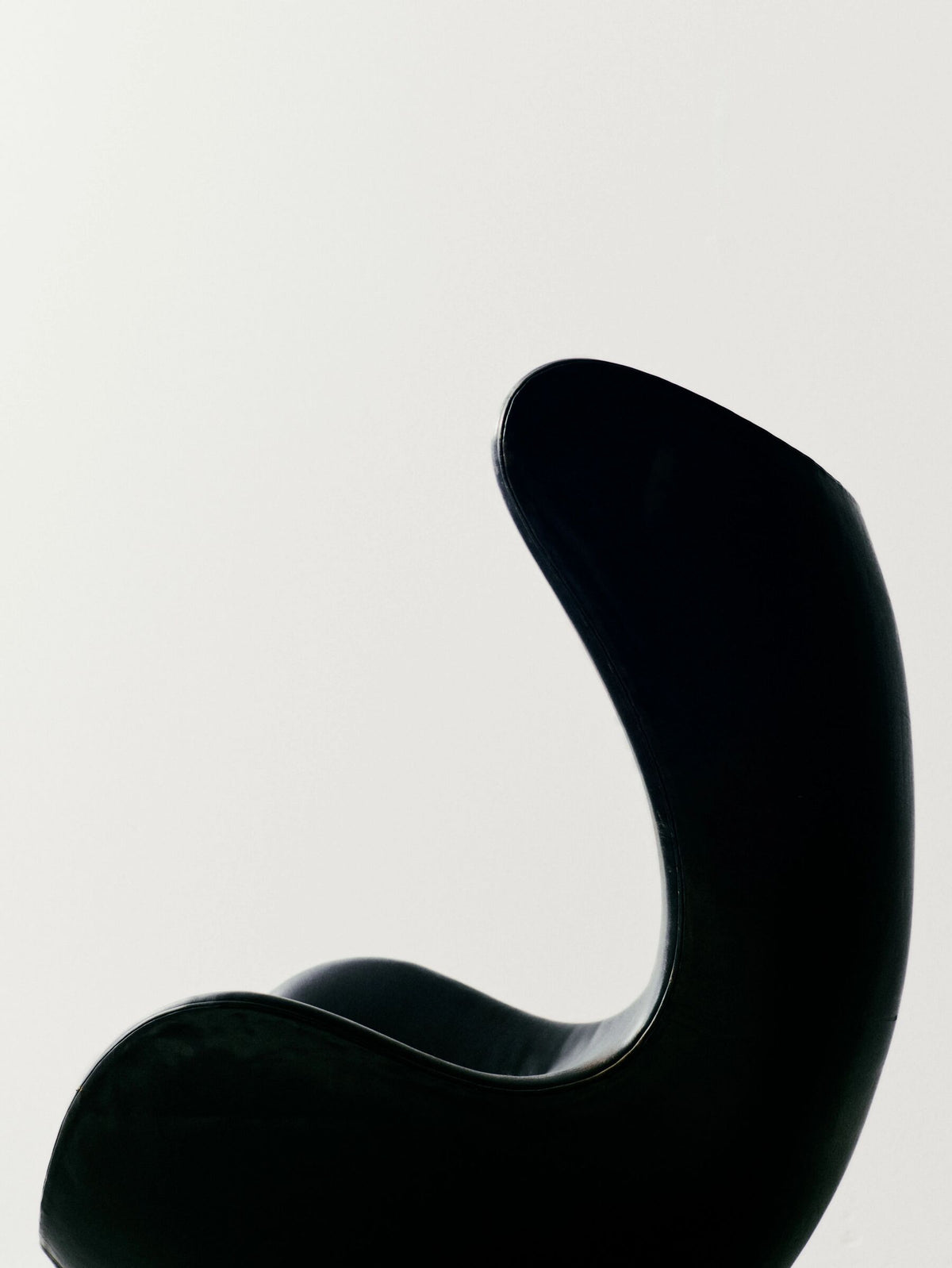
In the mid-1950s, Fritz Hansen acquired the rights to a technique for shaping furniture freely in hard foam, allowing Jacobsen to sculpt the organic forms of the Egg™ and Swan™ chairs for the SAS Royal Hotel, now the Radisson Collection Royal Hotel. Later designs, among them the Oxford™ and Lily™ chairs, carried the partnership into the 1960s, and Fritz Hansen made furniture for many of his major buildings.
Much of his furniture is still in production. In Copenhagen, Room 606 at the hotel is still furnished as Jacobsen designed it in 1960. Elsewhere, his chairs are part of daily life in homes, offices and public spaces, and they work as well now as when they were first made.
